How Statins Work
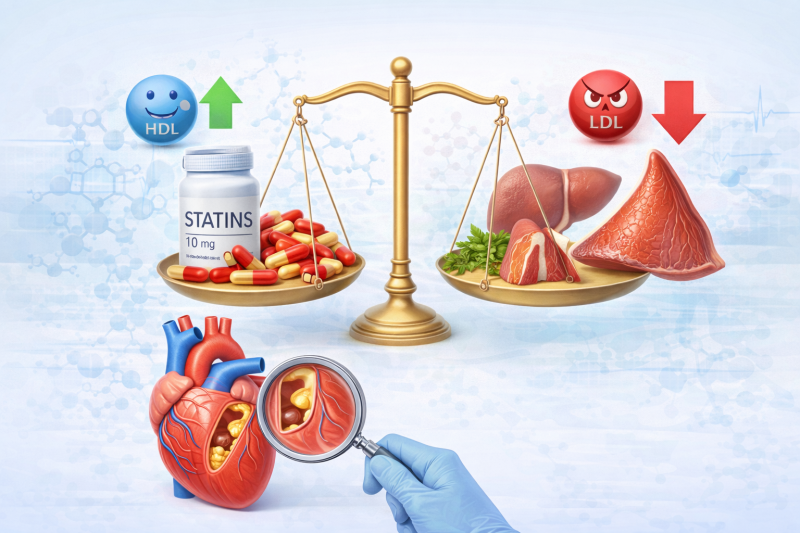
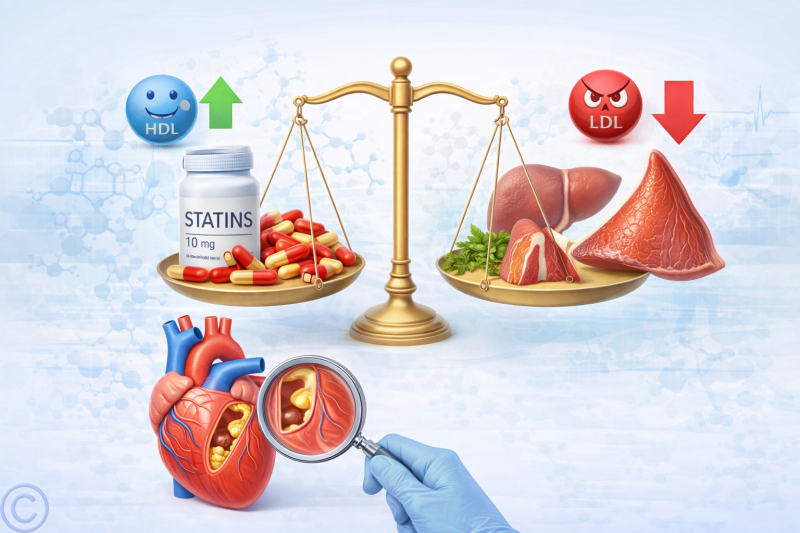
Statins lower cholesterol by inhibiting the enzyme HMG-CoA reductase in the liver, which plays a key role in cholesterol production.
This leads to a reduction in LDL levels and slows the formation of atherosclerotic plaques.
Who Should Take Statins
Statins are not prescribed to everyone, but to individuals with elevated cardiovascular risk.
- history of heart attack or stroke
- diagnosed atherosclerosis
- very high LDL cholesterol
- diabetes with additional risk factors
Benefits of Statins
Large clinical trials and meta-analyses show that statins:
- reduce the risk of heart attack and stroke by 20–30%
- lower cardiovascular mortality in high-risk patients
- slow the progression of atherosclerosis
Side Effects and Myths
Most patients tolerate statins well. Side effects are uncommon and usually reversible.
- muscle discomfort or weakness
- temporary elevation of liver enzymes
Scientific evidence does not support a link between statins and dementia or severe liver damage when properly monitored.
Can Cholesterol Be Lowered Without Statins?
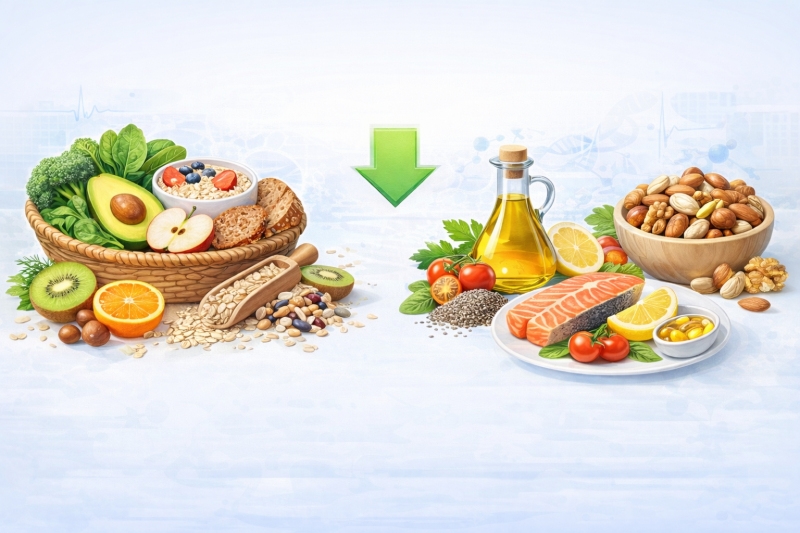
For individuals with moderate risk, lifestyle changes such as diet, exercise, and weight management may be sufficient.
The decision to start statins should always be individualized and based on overall risk assessment.
Conclusion
Statins are a well-studied and effective tool for preventing cardiovascular disease. When used appropriately, their benefits clearly outweigh potential risks.