How Food Affects Cholesterol
Cholesterol is not only consumed through food but also produced by the liver. However, dietary composition strongly influences blood cholesterol levels, particularly LDL.
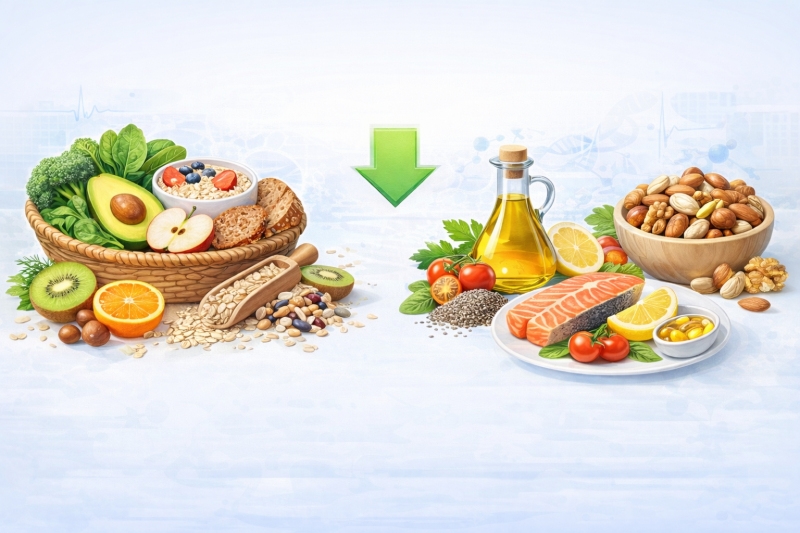
Diets rich in fiber, unsaturated fats, and plant compounds consistently show cholesterol-lowering effects.
Foods with Proven Benefits
- Oats and whole grains: contain soluble fiber (beta-glucans) that reduce cholesterol absorption.
- Legumes: beans, lentils, and chickpeas help lower LDL when consumed regularly.
- Nuts: almonds, walnuts, and hazelnuts improve lipid profiles through healthy fats.
- Omega-3 rich fish: salmon, mackerel, and sardines lower triglycerides and inflammation.
- Olive oil: a source of monounsaturated fats beneficial for LDL and HDL.
- Fruits and vegetables: rich in antioxidants and fiber.
Phytosterols and Plant Compounds
Phytosterols are plant-based compounds structurally similar to cholesterol and compete with it for absorption in the intestine.
Regular intake of phytosterol-rich foods can reduce LDL by 5–10%.
Foods to Limit
- fatty red meat
- butter and full-fat cheeses
- processed baked goods with trans fats
- sugary drinks and excess sugar
Conclusion
A diet centered on whole plant foods, fish, and healthy fats can significantly lower cholesterol levels and forms the foundation of long-term cardiovascular prevention.